Open Access Pub · About the journal
About Journal of Water
Journal of Water publishes peer-reviewed research on water as a physical, chemical, biological and social system. It brings the hydrological, chemical, ecological, engineering and policy accounts of the same water systems together in one open, citable record.
01
Why the journal exists
A question about water rarely stays inside one discipline. The quality of a household supply is a chemical and microbiological measurement, a question of catchment land use, and a question of how a utility is run. Journal of Water is edited so that each of those accounts can be published, reviewed and cited in the same place, and read by the people who need the others.
Publication here is open from the day an article appears. Authors retain copyright, and every article carries a Creative Commons Attribution (CC BY 4.0) license, so the work can be read, taught from and built on without a subscription.
02
The disciplinary setting
The journal's working setting runs from the movement of water through a landscape to the terms on which it reaches a tap. It takes in hydrological processes and watersheds; water quality, treatment and the chemistry of natural and engineered waters; aquatic and estuarine ecosystems; water resources, infrastructure and management; and the interactions between water, environment and society that those studies support.
Hydrological processes
Rainfall, runoff, groundwater and surface flow at catchment and regional scale, including modeled and observed behavior.
Water quality
Physicochemical and microbiological assessment of natural, supplied and treated waters, and the sources that shape it.
Aquatic ecosystems
Rivers, wetlands, lakes and estuaries as living systems, and their response to land use and hydrological change.
Resources and management
Storage, allocation, treatment infrastructure and the institutional arrangements through which water is supplied and used.
Published articles show that setting in use. The journal's scope statement is maintained on the Aims and Scope page.
03
Who the journal is for
The readership is researchers and graduate students in the water sciences, engineers and analysts in utilities and consultancies, and the agencies and practitioners responsible for supply, treatment and catchments. Work published here is written to be acted on as well as cited, which is why studies are expected to report their sites, methods and measurement conditions in full.
Each article is published with its complete bibliographic record and stays available at a stable address. The current issue and the archive hold the journal's published work.
04
Editorial responsibility
All submissions undergo initial editorial screening. Manuscripts that meet the journal's scope and minimum requirements proceed to independent peer review. Single-blind by default; double-blind review is available on request.
Manuscripts that proceed to external peer review are normally evaluated by at least two independent subject-matter experts. Editorial decisions are based on scope, scientific quality, methodological rigor, ethical compliance, reporting quality, and relevance to the journal.
Those decisions rest with the handling editor and the reviewers, and remain independent of fees, membership, and editorial or reviewing roles. The editorial policies set out authorship, ethics and correction practice in full, and the article processing charge is published on its own page.
Editorial leadership
The journal is led by an Editor-in-Chief working with an international editorial board. Board members are listed with their affiliations and verified profiles on the Editorial Board page.
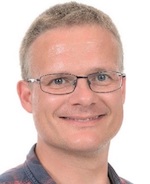
Editor-in-Chief
University of Salford, Salford, United Kingdom. Research interests: integrated constructed wetlands, sustainable flood retention basins, wastewater treatment, and water resources management.
Send a manuscript
- Primary route ManuscriptZone
- Alternative route Simple manuscript submission form
- Assisted route Editorial email — [email protected]
Authors must use only one submission route for the same manuscript.